
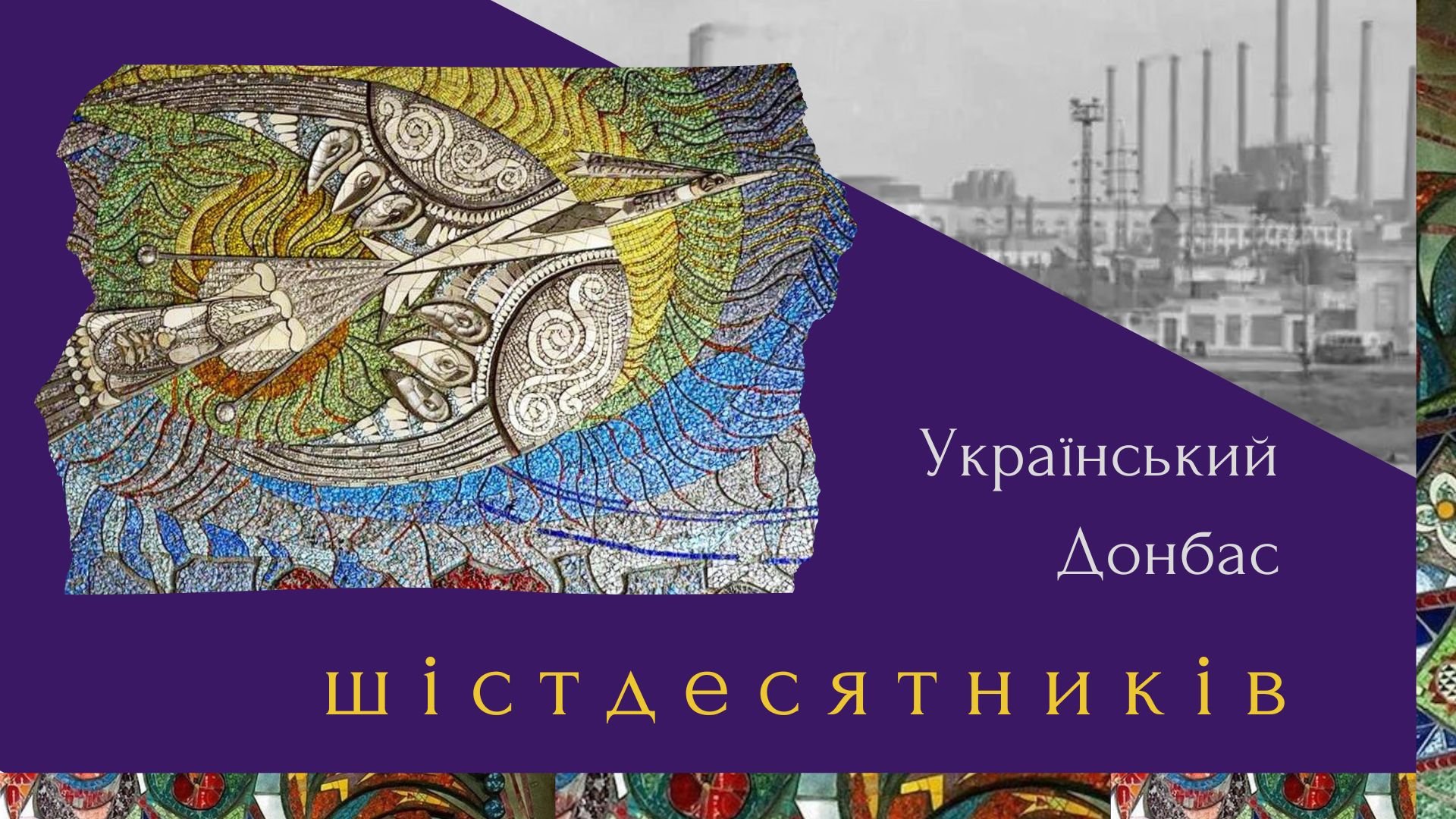
The full-scale invasion of Russian troops into the territory of Ukraine necessitated the suspension and safeguarding of permanent exhibitions. The Sixtiers Museum presented the wartime exhibition “Ukrainian Donbas” in order to once again draw attention to the temporarily occupied Donetsk and Luhansk regions, as well as to the destroyed cities and cultural landmarks associated with prominent Sixtiers.
Leaders of the Sixtiers resistance movement and its outstanding figures Ivan Svitlychnyi, his sister Nadiia, Ivan Dziuba, as well as members of the Ukrainian Helsinki Group Mykola Rudenko, Petro Hryhorenko, and Oleksa Tykhyi, were natives of the eastern regions. The poet Vasyl Stus spent more than 20 years of his life in Donetsk (other names – Yuzivka, Stalino). The work of Ukrainian monumental artists of the Sixtiers – Alla Horska, Viktor Zaretskyi, Halyna Zubchenko, and Hryhorii Pryshedko – is also closely connected with Donbas; they created a number of mosaic panels in Donetsk, Krasnodon, and Zhdanov – now Mariupol.
The photographs of Ukrainian heroes and their native cities presented at the exhibition make it possible to tell the story of the Sixtiers’ activities, which were initially aimed at the revival of Ukrainian culture and, ultimately, at achieving statehood. Cities and cultural heritage of Donbas destroyed by Russian aggression have become a symbolic continuation of the deliberate, long-term destruction of the lives of the Sixtiers.
The main exhibits of the exhibition are original models of the mosaic panels “Tree of Life” (“Tree of the Metallurgist”) and “Boryviter,” created in 1967 for approval by the art council before the start of decorative works at the Zhdaniv (Mariupol) restaurant “Ukraine.” The models allow visitors to immerse themselves in the artistic details and experimental nature of the works, to trace the difference between creative concept and realization, and to comprehend their symbolic connection with the urban industrial space of Mariupol and contemporary events. The fate of the mosaics turned out to be difficult: banned/lost during Soviet times, rediscovered in the years of independent Ukraine (2008), and destroyed as a result of mass shelling by Russian troops in 2022.